Rapid technological change is redefining how organizations operate, creating both opportunity and uncertainty for workers. Automation, artificial intelligence, and digital transformation are reshaping job roles faster than traditional workforce models can adapt. In this environment, fear of redundancy has become a common concern. To address this challenge, workplace reskilling has emerged as a strategic solution that benefits both employers and employees. Rather than relying on layoffs to manage change, organizations are investing in continuous employee training to prepare their workforce for evolving roles. As automation accelerates, workplace reskilling is proving essential for preserving job security and maintaining organizational resilience.
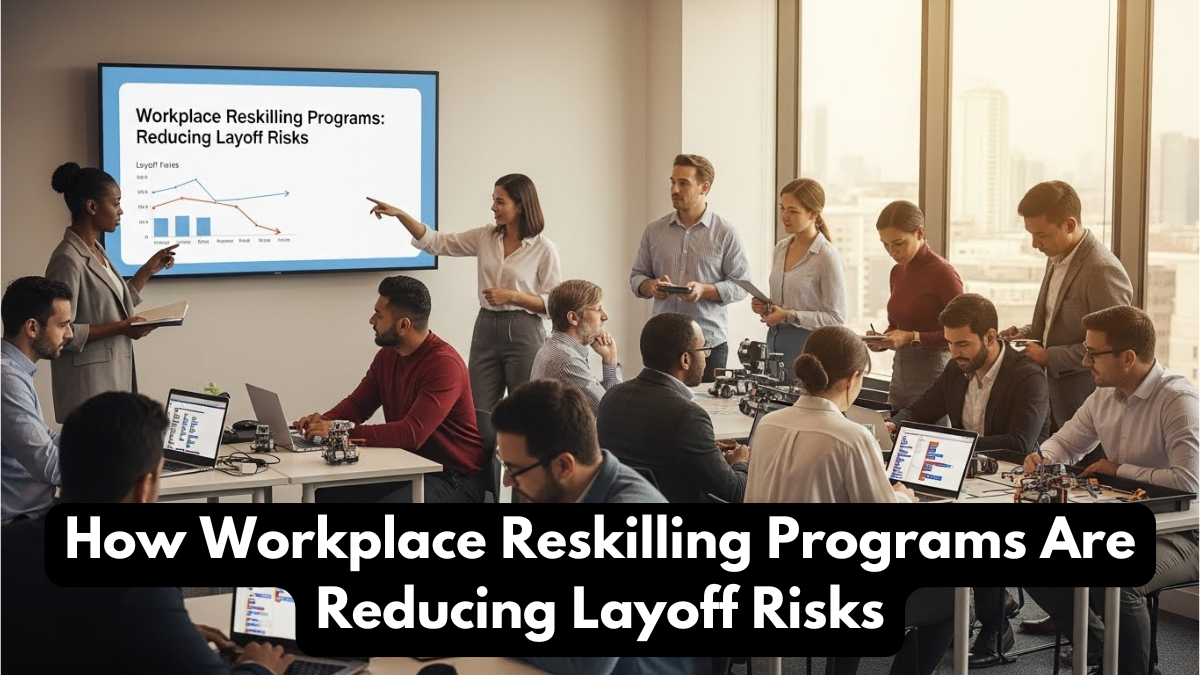
Understanding Workplace Reskilling in the Modern Economy
Workplace reskilling refers to structured initiatives that help employees acquire new skills to meet changing business needs. Unlike traditional training, which often focuses on current job requirements, reskilling prepares workers for future roles. As automation replaces repetitive tasks, demand grows for skills related to problem-solving, digital tools, and strategic thinking. Through targeted employee training, organizations can redeploy talent instead of reducing headcount. This approach strengthens job security while ensuring that businesses remain competitive in a technology-driven economy.
Why Automation Is Driving the Need for Reskilling
The rise of automation has fundamentally altered the employment landscape. Machines and algorithms now perform tasks once handled by humans, increasing efficiency but also displacing certain roles. Without proactive workplace reskilling, employees risk becoming obsolete as job requirements shift. Forward-thinking organizations recognize that employee training is a more sustainable response than layoffs. By equipping workers with new competencies, companies can integrate automation smoothly while protecting job security and retaining institutional knowledge.
Employee Training as a Strategic Investment
Effective workplace reskilling programs treat employee training as a long-term investment rather than a short-term expense. Structured learning pathways, mentorship, and hands-on projects help employees transition into emerging roles. This approach builds confidence and adaptability, enabling workers to embrace change rather than resist it. As employees see clear opportunities for growth, perceptions of job security improve. In turn, organizations benefit from higher engagement, loyalty, and productivity, demonstrating how workplace reskilling aligns human development with business goals.
Reducing Layoff Risks Through Internal Mobility
One of the most tangible outcomes of workplace reskilling is reduced reliance on layoffs during periods of change. Instead of cutting roles made redundant by automation, organizations can redeploy trained employees into new positions. Internal mobility becomes a powerful tool for workforce stability. Continuous employee training ensures that skills remain relevant, allowing companies to adapt quickly to market shifts. By prioritizing job security, organizations foster trust and resilience, which are critical during times of transformation.
Key Benefits of Workplace Reskilling Programs
Organizations that implement strong workplace reskilling initiatives experience several advantages:
- Improved job security for employees
- Reduced costs associated with layoffs and rehiring
- Smoother integration of automation
- Higher engagement through continuous employee training
- Stronger organizational adaptability
These benefits explain why workplace reskilling is increasingly viewed as a core component of workforce strategy.
Workplace Reskilling vs Traditional Layoff Approaches
| Aspect | Traditional Layoffs | Workplace Reskilling |
|---|---|---|
| Response to automation | Job reduction | Skill transformation |
| Employee morale | Low | High |
| Cost impact | Short-term savings | Long-term value |
| Job security | Weak | Strengthened |
| Talent retention | Limited | High |
This comparison highlights how workplace reskilling offers a more sustainable alternative to workforce reduction.
Challenges in Implementing Reskilling Programs
Despite its advantages, workplace reskilling presents challenges such as time constraints, budget limitations, and resistance to change. Not all employees adapt at the same pace, making personalized employee training essential. Organizations must also align reskilling efforts with strategic goals to ensure relevance. Clear communication about job security and future opportunities helps overcome skepticism. When implemented thoughtfully, workplace reskilling can transform potential disruption from automation into a catalyst for growth.
The Future of Job Security in an Automated World
As automation continues to evolve, traditional notions of lifetime employment are being replaced by continuous skill development. Workplace reskilling will play a central role in redefining job security, shifting it from role-based stability to skill-based adaptability. Organizations that invest in ongoing employee training will be better positioned to navigate uncertainty. This proactive approach ensures that both businesses and workers can thrive in an automated future.
Conclusion
The growing adoption of workplace reskilling reflects a fundamental shift in how organizations manage change. By prioritizing employee training, companies can integrate automation without sacrificing job security. Reskilling programs reduce layoff risks, strengthen workforce resilience, and align human potential with technological progress. In an era of constant disruption, workplace reskilling is not just a defensive strategy but a forward-looking investment in sustainable growth and shared success.
FAQs
What is workplace reskilling?
Workplace reskilling involves training employees with new skills to adapt to changing job requirements and technologies.
How does workplace reskilling reduce layoffs?
By preparing employees for new roles created by automation, organizations can redeploy talent instead of eliminating positions.
Why is employee training important for job security?
Continuous employee training ensures skills remain relevant, strengthening long-term job security.
Is workplace reskilling expensive?
While it requires investment, workplace reskilling often costs less than layoffs and rehiring over time.
Can workplace reskilling keep up with automation?
Yes, when aligned with strategic planning, workplace reskilling helps organizations adapt effectively to ongoing automation.
Click here to know more.