Recruitment practices are undergoing a fundamental transformation as organizations struggle to keep pace with rapidly evolving skill requirements. Traditional resume screening methods, which emphasize degrees, job titles, and years of experience, often fail to capture a candidate’s true capabilities. This mismatch has led employers to seek more accurate and inclusive hiring approaches. In response, skills based hiring has emerged as a modern recruitment strategy that focuses on demonstrated abilities rather than credentials. Supported by advanced talent platforms and innovative HR tech, this shift is redefining how companies identify, evaluate, and hire talent.
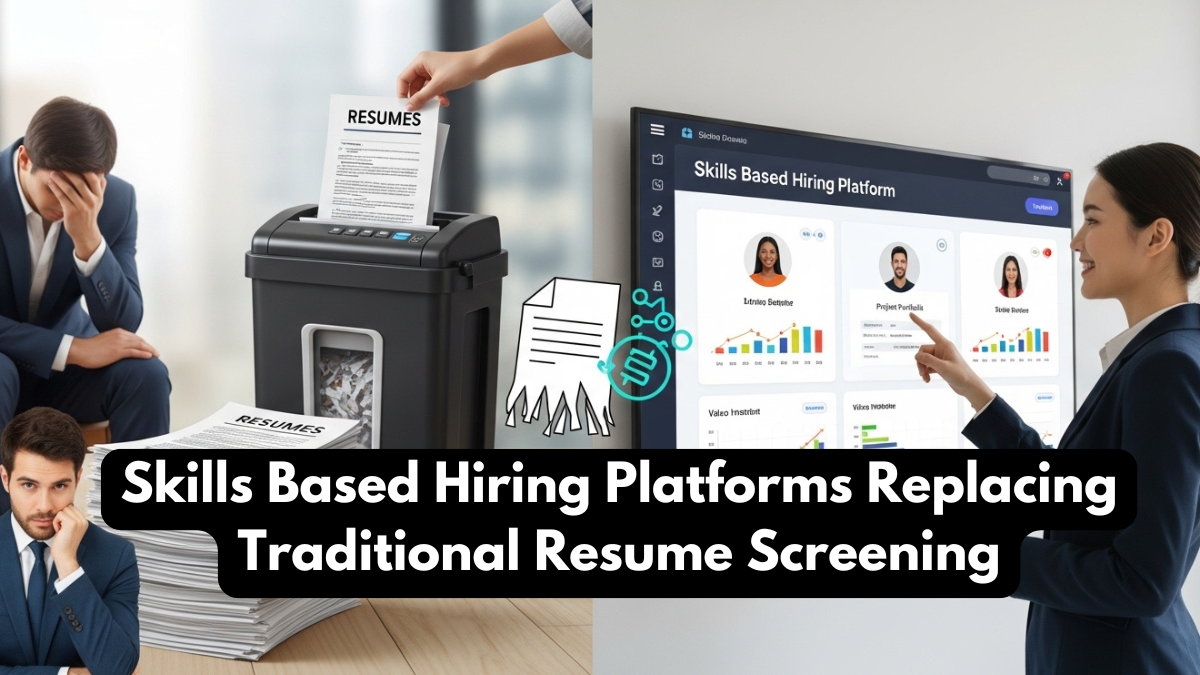
Understanding Skills Based Hiring
At its core, skills based hiring prioritizes what candidates can do over where they come from academically or professionally. Instead of filtering applicants based on resumes alone, employers assess specific competencies through tests, simulations, and real-world tasks. This approach reduces bias and opens opportunities to a broader talent pool. As HR tech continues to evolve, skills based hiring is becoming easier to implement at scale, allowing organizations to match roles with verified skill sets more effectively.
By leveraging talent platforms, recruiters can access data-driven insights into candidate performance, learning agility, and problem-solving abilities. These platforms standardize assessments and ensure consistency, making skills based hiring both fairer and more predictive of on-the-job success.
Role of Talent Platforms in Modern Recruitment
Talent platforms play a pivotal role in enabling skills based hiring by serving as centralized ecosystems for sourcing, assessing, and managing candidates. These platforms integrate assessments, skill taxonomies, and analytics into a single interface, streamlining the hiring process. Employers can define role-specific skill requirements and evaluate candidates objectively against those benchmarks.
Key capabilities offered by modern talent platforms include:
- Skill assessments and coding challenges
- Behavioral and cognitive testing
- AI-driven candidate matching
- Continuous skill profile updates
By embedding these features, talent platforms enhance the accuracy and efficiency of skills based hiring, while reducing reliance on subjective resume screening.
Impact of HR Tech on Hiring Efficiency and Fairness
The rise of advanced HR tech has accelerated the adoption of skills based hiring across industries. Automation, artificial intelligence, and data analytics enable recruiters to process large applicant volumes without compromising quality. HR tech tools help eliminate unconscious bias by focusing evaluations on measurable skills rather than background factors.
In addition, HR tech supports ongoing workforce development by tracking employee skills over time. This data-driven approach allows organizations to identify skill gaps, plan training initiatives, and promote internal mobility. As a result, skills based hiring becomes part of a broader talent management strategy rather than a standalone recruitment tactic.
Comparison of Resume-Based Hiring vs Skills Based Hiring
The table below compares traditional hiring methods with skills based hiring, highlighting the role of talent platforms and HR tech:
| Aspect | Resume-Based Hiring | Skills Based Hiring |
|---|---|---|
| Evaluation Criteria | Education and job history | Demonstrated skills |
| Bias Risk | Higher | Reduced through objective assessment |
| Candidate Pool | Limited | Broader and more diverse |
| Predictive Accuracy | Inconsistent | Higher job performance alignment |
| Technology Use | Minimal automation | Advanced HR tech and talent platforms |
This comparison shows why skills based hiring is increasingly preferred for modern workforce needs.
Benefits for Employers and Job Seekers
For employers, skills based hiring leads to better hiring outcomes by aligning talent with actual job requirements. Reduced turnover, faster onboarding, and improved productivity are common benefits. Talent platforms also provide scalability, allowing organizations to hire efficiently across regions and roles. With robust HR tech, recruiters gain visibility into candidate readiness and potential growth.
Job seekers benefit as well, particularly those from non-traditional backgrounds. Skills based hiring values self-taught skills, certifications, and practical experience, creating more equitable access to opportunities. As talent platforms gain adoption, candidates can showcase their abilities directly, bypassing outdated resume filters.
Challenges and Adoption Considerations
Despite its advantages, transitioning to skills based hiring requires organizational change. Employers must invest in reliable assessments and align internal stakeholders around new evaluation criteria. Selecting the right HR tech and talent platforms is critical to ensuring accuracy and scalability. Clear communication with candidates about expectations and evaluation methods also supports trust and transparency.
As standards mature and best practices emerge, these challenges are becoming easier to address. Organizations that commit to skills based hiring early gain a competitive edge in attracting and retaining talent.
Conclusion: The Future of Skills Based Hiring
In conclusion, skills based hiring is redefining recruitment by replacing traditional resume screening with objective, performance-driven evaluation. Supported by powerful talent platforms and innovative HR tech, this approach improves fairness, accuracy, and efficiency across the hiring process. As workforce demands continue to evolve, skills based hiring will play a central role in building agile, inclusive, and future-ready organizations.
FAQs
What is skills based hiring?
Skills based hiring focuses on evaluating candidates based on demonstrated abilities rather than resumes or formal credentials.
How do talent platforms support skills based hiring?
Talent platforms provide assessments, analytics, and matching tools that help employers evaluate skills objectively.
Why is HR tech important for modern recruitment?
HR tech enables automation, data-driven decisions, and scalable hiring processes aligned with skills-based evaluation.
Does skills based hiring improve diversity?
Yes, by reducing reliance on traditional credentials, it broadens access and reduces bias in hiring decisions.
Click here to know more.