Urban congestion has become one of the most persistent challenges facing modern cities. As populations grow and vehicle ownership increases, limited parking space fuels frustration, wasted time, and rising emissions. Studies consistently show that a significant share of inner-city traffic consists of drivers circling blocks in search of parking. In response, cities are turning to smart parking systems as a practical solution to ease congestion and improve daily commuting experiences. By integrating real-time data, advanced sensors, and coordinated traffic management, these systems are reshaping city mobility and helping urban areas function more efficiently.
Understanding Smart Parking Systems in Urban Environments
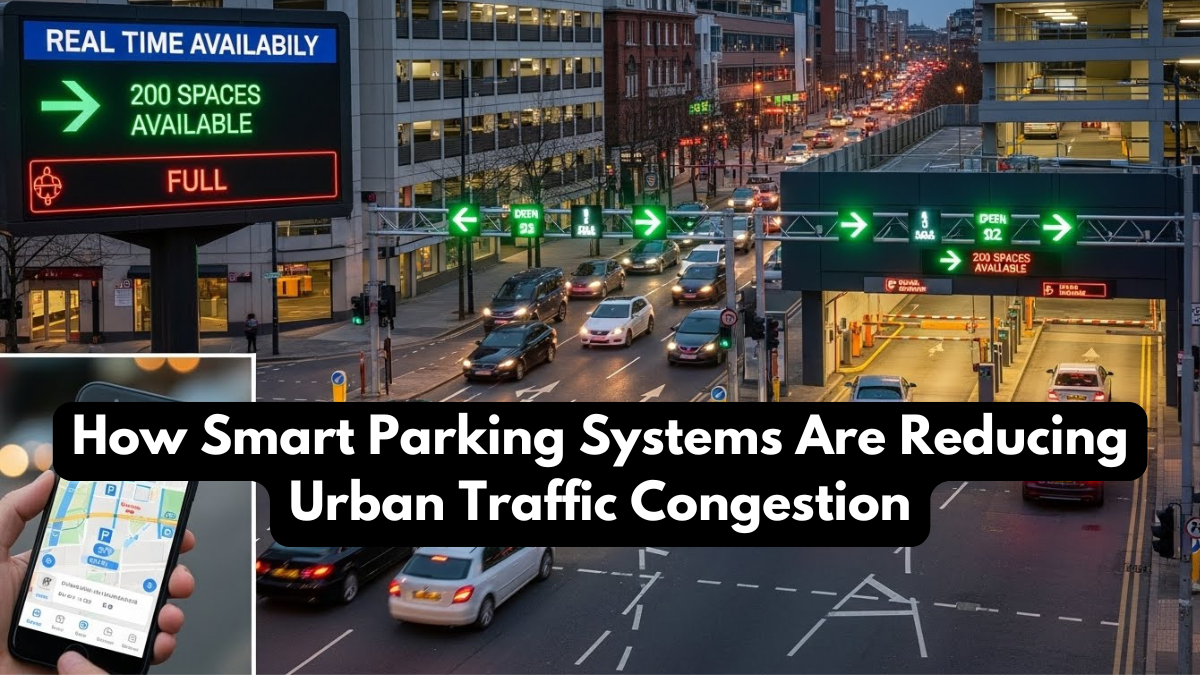
Smart parking systems use digital infrastructure to monitor parking availability and guide drivers to open spaces. At the core of these systems are sensors embedded in parking spots, cameras, and connected meters that detect occupancy in real time. This information is shared through apps, digital signs, or navigation platforms, allowing drivers to make informed decisions before entering crowded areas. By reducing uncertainty and idle driving, smart parking systems support smoother traffic management and contribute to better city mobility across dense urban zones.
How Sensors Enable Real-Time Traffic Management
Advanced sensors are the backbone of effective smart parking systems. These devices collect continuous data on space availability, duration of parking, and turnover rates. When integrated with broader traffic management platforms, the data helps city planners identify congestion hotspots and adjust traffic flows dynamically. For example, routing drivers directly to available parking reduces unnecessary circulation. This real-time responsiveness enhances city mobility by lowering congestion levels, shortening travel times, and improving overall road efficiency.
Impact of Smart Parking on City Mobility
Improved city mobility is one of the most visible outcomes of deploying smart parking systems. By minimizing time spent searching for parking, cities reduce bottlenecks and improve traffic flow on main roads. Public transport also benefits when bus lanes and intersections are less obstructed by parking-related congestion. As traffic management becomes more data-driven, urban mobility strategies can prioritize pedestrians, cyclists, and public transit alongside private vehicles. In this way, smart parking systems support more balanced and inclusive transportation networks.
Environmental and Economic Benefits
Beyond congestion reduction, smart parking systems deliver environmental and economic advantages. Fewer vehicles idling or circling city blocks means lower fuel consumption and reduced emissions. From an economic perspective, efficient parking increases turnover, benefiting local businesses and improving revenue collection for municipalities. Sensors also enable dynamic pricing, which encourages better space utilization and supports traffic management goals. Together, these benefits strengthen city mobility while aligning with sustainability objectives.
Key Advantages of Smart Parking Systems
Cities adopting smart parking systems commonly experience the following benefits:
- Reduced congestion through optimized traffic management
- Lower emissions due to less idle driving
- Improved user experience via real-time sensors
- Enhanced city mobility and accessibility
- Better data for urban planning decisions
These advantages explain the rapid global adoption of smart parking systems.
Traditional Parking vs Smart Parking Systems
| Aspect | Traditional Parking | Smart Parking Systems |
|---|---|---|
| Space visibility | Limited | Real-time via sensors |
| Traffic impact | High congestion | Reduced congestion |
| Traffic management | Reactive | Proactive and data-driven |
| City mobility | Constrained | Optimized |
| User experience | Frustrating | Efficient and predictable |
This comparison highlights how smart parking systems outperform traditional approaches in dense cities.
Challenges in Implementing Smart Parking Systems
Despite their benefits, smart parking systems face implementation challenges. High upfront costs for sensors and infrastructure can deter smaller municipalities. Data integration across agencies requires coordination to ensure seamless traffic management. Privacy concerns around data collection must also be addressed transparently. However, as technology matures and costs decline, these barriers are becoming more manageable, making widespread adoption increasingly feasible for cities focused on improving city mobility.
Role of Policy and Public-Private Partnerships
Policy support and partnerships are critical to scaling smart parking systems. Governments often collaborate with technology providers to deploy sensors and analytics platforms efficiently. Clear regulations help align parking strategies with broader traffic management goals, such as reducing congestion and emissions. Public-private partnerships also accelerate innovation while ensuring accountability. When policy and technology work together, city mobility initiatives gain momentum and public acceptance.
Future of Smart Parking and Urban Traffic
Looking ahead, smart parking systems are expected to integrate with autonomous vehicles, predictive analytics, and citywide mobility platforms. Advanced sensors will anticipate demand and guide vehicles before congestion occurs. These developments will further enhance traffic management, enabling cities to respond proactively rather than reactively. As part of holistic city mobility strategies, smart parking will remain a cornerstone of intelligent urban infrastructure.
Conclusion
The adoption of smart parking systems marks a significant step toward addressing chronic urban traffic congestion. By leveraging sensors, improving traffic management, and supporting efficient city mobility, these systems transform how cities handle limited parking resources. While challenges exist, the long-term benefits for congestion reduction, environmental sustainability, and user satisfaction are clear. As urban centers continue to grow, smart parking systems will play a vital role in creating smarter, more livable cities.
FAQs
What are smart parking systems?
Smart parking systems use digital technology and sensors to provide real-time information on parking availability.
How do smart parking systems reduce traffic congestion?
They guide drivers directly to available spaces, improving traffic management and reducing unnecessary driving.
What role do sensors play in smart parking?
Sensors detect parking occupancy and feed real-time data into navigation and management platforms.
Can smart parking systems improve city mobility?
Yes, by reducing congestion and optimizing parking use, they enhance overall city mobility.
Are smart parking systems expensive to implement?
Initial costs exist, but long-term savings and congestion reduction often outweigh investments.
Click here to know more.