Modern societies depend on uninterrupted electricity, yet recent years have revealed just how fragile that dependency can be. The challenge of electric grid reliability has become one of the most critical infrastructure issues worldwide. As cities expand, climate patterns intensify, and energy consumption rises, power systems are increasingly strained by demand peaks, unexpected outages, and the complex integration of renewables and storage technologies. Understanding why grids struggle during these moments is essential to building a more stable and resilient energy future.
Historically, grids were designed for predictable consumption patterns and centralized power generation. Today’s environment is vastly different. Weather extremes trigger sudden surges in heating and cooling demand. Electric vehicles, data centers, and digital economies add new layers of consumption. At the same time, the transition toward renewables introduces variability that must be balanced carefully. These forces collide most dramatically during demand peaks, when every weakness in the system becomes visible.
The root causes of declining electric grid reliability
The erosion of electric grid reliability is not the result of a single factor but a convergence of multiple pressures. Aging infrastructure remains one of the biggest concerns. Many transmission lines, transformers, and substations were built decades ago and are now operating beyond their intended lifespan. These systems were never designed to handle today’s load patterns or the unpredictability of modern consumption.
Another major factor is the rising frequency of extreme weather. Heatwaves push cooling systems into overdrive, while cold snaps cause massive heating loads. These events create sudden demand peaks that overwhelm supply, increasing the risk of cascading outages. Without sufficient storage capacity or rapid-response backup generation, grids struggle to maintain balance.
The complicated role of renewables and storage
The shift toward renewables is essential for long-term sustainability, but it also presents operational challenges for electric grid reliability. Solar and wind power are inherently variable, producing electricity only when the sun shines or the wind blows. While renewables reduce emissions, they require sophisticated balancing systems to ensure consistent supply.
This is where storage becomes critical. Batteries, pumped hydro, and other storage technologies absorb excess energy during low demand and release it during demand peaks. However, global storage capacity still lags behind renewable generation growth. Without adequate storage, grids become vulnerable to instability, especially when renewable output fluctuates rapidly.
Below is a simplified comparison of energy balancing methods:
| Energy Source | Predictability | Grid Impact |
|---|---|---|
| Fossil fuels | High | Stable but polluting |
| Nuclear | Very high | Consistent baseload |
| Solar renewables | Medium | Variable, weather-dependent |
| Wind renewables | Medium | Intermittent |
| Battery storage | High | Stabilizes fluctuations |
This balance between generation and storage is now the defining challenge of modern grid management.
Why demand peaks push systems to the breaking point
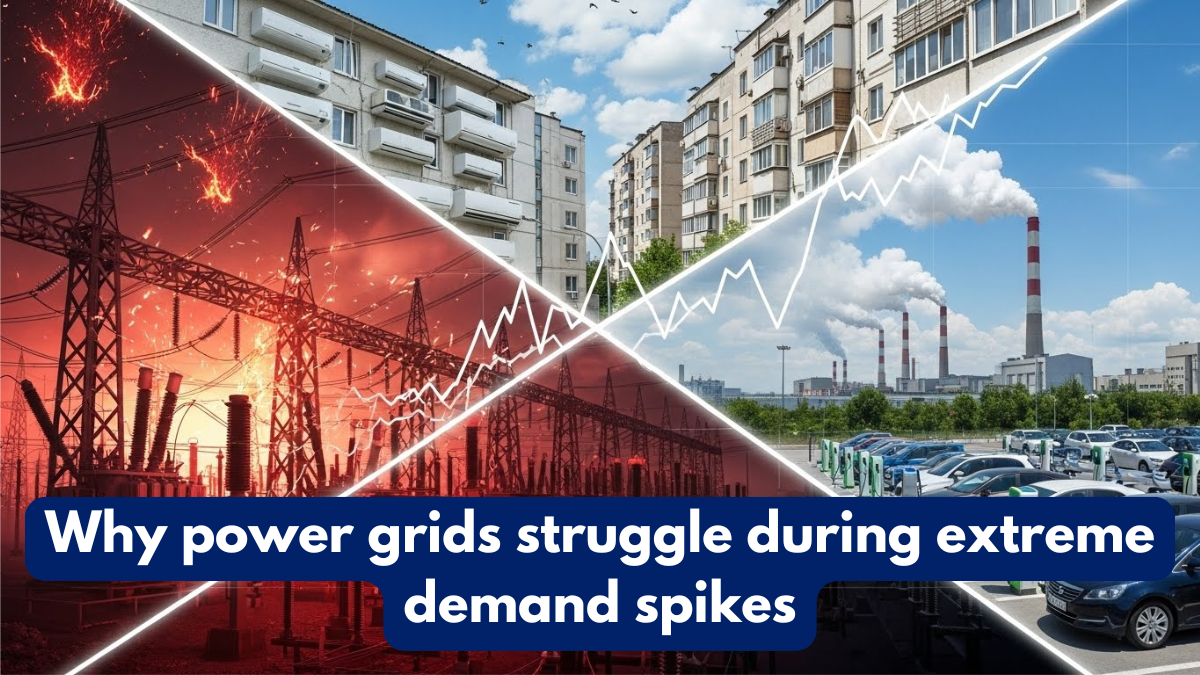
Few moments test electric grid reliability more severely than extreme demand peaks. These spikes occur when millions of consumers simultaneously increase energy use, such as during heatwaves or freezing winters. Power plants ramp up production, transmission lines approach capacity, and even small failures can trigger widespread outages.
Demand response programs attempt to smooth these peaks by incentivizing consumers to reduce consumption during critical hours. Smart meters, dynamic pricing, and automated controls are helping, but they cannot yet eliminate the fundamental mismatch between rising demand and aging infrastructure.
How outages ripple through society and the economy
When outages occur, their effects extend far beyond inconvenience. Hospitals, transportation systems, water treatment facilities, and communication networks all rely on continuous electricity. Even brief disruptions can cause economic losses, public safety risks, and long-term infrastructure damage.
Strengthening electric grid reliability is therefore not just an engineering challenge but a societal necessity. Investment in modernization, expanded storage, diversified renewables, and resilient design is essential to prevent cascading failures.
Conclusion: building the grid of the future
The future of electric grid reliability depends on how effectively societies adapt to new energy realities. By reinforcing infrastructure, expanding storage, integrating renewables intelligently, and preparing for extreme demand peaks, nations can reduce outages and create energy systems capable of withstanding 21st-century challenges. The stability of modern civilization increasingly rests on the success of this transformation.
FAQs
What is electric grid reliability?
Electric grid reliability refers to the ability of power systems to deliver consistent, uninterrupted electricity under all conditions.
Why do renewables affect grid stability?
Because renewables like solar and wind are weather-dependent, they introduce variability that requires strong balancing systems and sufficient storage.
How does storage improve grid reliability?
Energy storage absorbs surplus power and releases it during shortages, stabilizing supply during demand peaks.
What causes most large-scale outages?
Extreme weather, aging infrastructure, and sudden demand peaks are the leading causes of major outages.
Can future grids eliminate outages entirely?
While outages cannot be eliminated completely, modern technology and smarter grid design can dramatically reduce their frequency and impact.
Click here to know more.