As climate change, rising sea levels, population growth, and urban overcrowding continue affecting major cities worldwide, architects and engineers are exploring entirely new ways of building human settlements. One of the most ambitious ideas gaining global attention is the floating cities future concept, a vision where self-sustaining cities could exist directly on oceans and coastal waters. These futuristic communities are designed to combine sustainability, advanced engineering, renewable energy systems, and innovative urban planning into entirely new forms of human civilization.
The growing interest in advanced ocean cities reflects concerns about limited land availability and environmental resilience. At the same time, the idea of future living on water appeals to people interested in sustainable architecture, technological innovation, and climate adaptation. Floating cities are no longer considered pure science fiction because governments, private companies, and international organizations are actively researching real-world prototypes and marine urban infrastructure. The discussion around the floating cities future concept continues expanding as experts search for long-term solutions to global urban and environmental challenges.
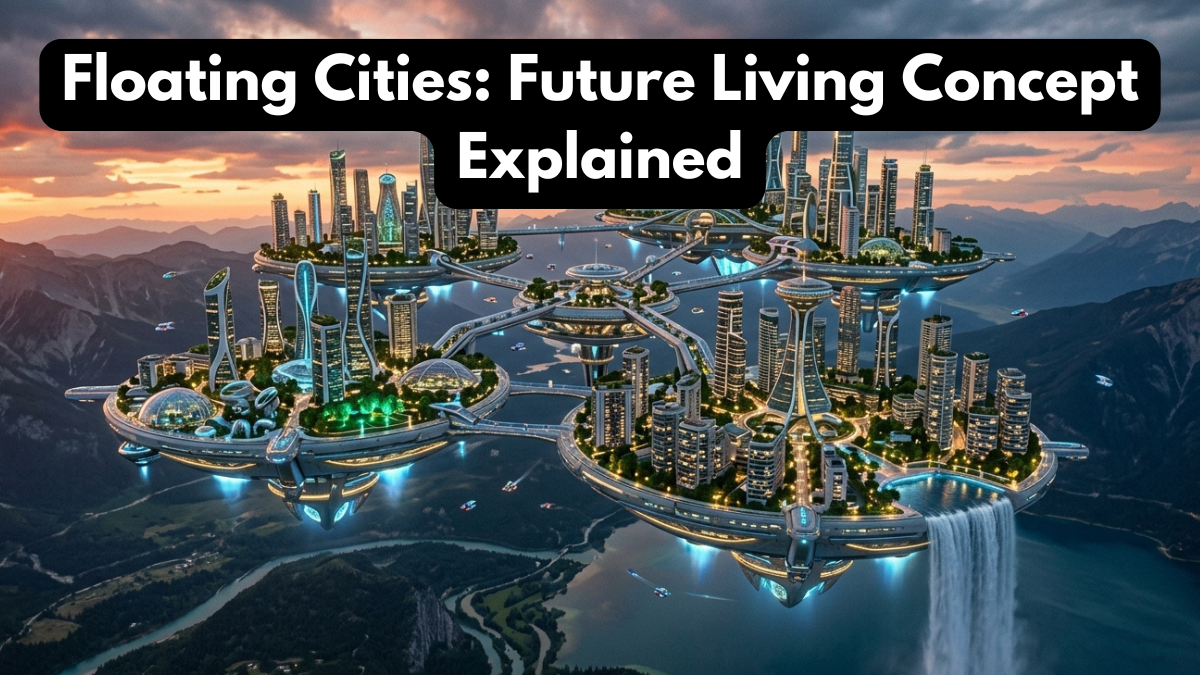
What Are Floating Cities?
The idea behind the floating cities future concept involves creating permanent or semi-permanent urban communities built directly on floating platforms in oceans, bays, or coastal waters. These floating settlements are designed to function like modern cities while remaining environmentally sustainable and climate-resilient.
Unlike traditional coastal developments, modern ocean cities would include advanced infrastructure systems capable of supporting housing, transportation, energy production, food cultivation, and waste management directly on water.
Key features proposed for floating cities include:
- Renewable energy systems
- Floating residential districts
- Water recycling technology
- Marine transportation networks
- Underwater infrastructure
- Smart city technology
- Sustainable food production
The concept of future living within floating cities focuses heavily on self-sufficiency and environmental harmony. Designers aim to create communities that minimize pollution while adapting to rising sea levels and changing climate conditions.
The fascination surrounding the floating cities future concept comes from its combination of futuristic engineering, sustainability, and radical urban innovation.
Why Floating Cities Are Being Considered
The increasing interest in floating cities future concept projects is strongly connected to global environmental and urban challenges. Rising sea levels threaten many coastal regions, while urban populations continue growing rapidly.
Several major factors driving interest in ocean cities include:
- Climate change adaptation
- Coastal overcrowding
- Limited urban land
- Sustainable development goals
- Renewable energy integration
- Disaster resilience
The idea of future living on water also offers potential advantages for countries with limited land resources or vulnerable coastlines. Floating infrastructure could allow cities to expand without requiring additional land development.
Below is a table showing how floating cities compare with traditional urban development:
| Feature | Traditional Cities | Floating Cities |
|---|---|---|
| Land Dependency | Fixed land-based | Water-based platforms |
| Climate Adaptability | Limited flexibility | Sea-level resilient |
| Energy Systems | Conventional grids | Renewable-focused |
| Expansion Options | Restricted by land | Modular expansion |
| Environmental Design | Urban-centered | Eco-integrated systems |
| Transportation | Roads and highways | Marine transportation |
The growing popularity of the floating cities future concept reflects how governments and urban planners are increasingly searching for innovative solutions to long-term environmental and population pressures.
Engineering Behind Ocean Cities
Building functional ocean cities requires extremely advanced engineering and marine architecture. Floating cities must withstand storms, waves, corrosion, and long-term environmental stress while supporting large populations safely.
Modern floating cities future concept designs often include technologies such as:
- Reinforced floating platforms
- Modular construction systems
- Wave-resistant foundations
- Renewable energy grids
- Desalination plants
- Smart environmental monitoring
The engineering behind future living on water is heavily inspired by offshore oil platforms, cruise ships, and advanced marine infrastructure. Engineers use lightweight but durable materials capable of resisting saltwater corrosion and structural stress.
Renewable energy plays a major role in floating city development. Many proposed ocean cities rely on solar panels, wind turbines, tidal energy systems, and ocean thermal energy conversion to generate sustainable power.
The complexity of the floating cities future concept demonstrates how architecture, marine engineering, and environmental science are increasingly interconnected.
Sustainability and Environmental Benefits
One of the biggest reasons experts support the floating cities future concept is its potential environmental sustainability. Floating communities could reduce pressure on overcrowded urban areas while introducing cleaner infrastructure systems.
Potential environmental advantages of ocean cities include:
- Reduced land consumption
- Renewable energy integration
- Lower urban heat impact
- Sustainable water management
- Climate resilience
- Eco-friendly transportation
The concept of future living in floating environments also encourages innovative food production methods such as hydroponic farming, vertical agriculture, and ocean-based aquaculture systems.
Many floating city designs aim to operate as circular economies where waste is recycled, energy is renewable, and water systems are self-sustaining.
The environmental goals connected to the floating cities future concept make these projects attractive to sustainability researchers and climate adaptation planners worldwide.
Real-World Floating City Projects
Although many floating city ideas remain conceptual, several organizations and governments are already exploring practical prototypes and pilot projects.
Some notable ocean cities initiatives include:
- Oceanix floating city concepts
- Maldives floating city projects
- Seasteading Institute proposals
- Dutch floating neighborhood developments
- Floating solar infrastructure projects
These experimental communities are testing technologies related to future living on water while exploring economic and environmental feasibility.
The Maldives, for example, has shown interest in floating urban solutions because of rising sea levels threatening low-lying islands. Similarly, the Netherlands has become a global leader in floating architecture due to its long history of water management.
The expansion of the floating cities future concept into real-world projects demonstrates that floating urban development is becoming increasingly practical rather than purely theoretical.
Challenges Facing Floating City Development
Despite its potential, the floating cities future concept faces several major challenges that must be solved before large-scale implementation becomes possible.
Some major concerns include:
- High construction costs
- Marine engineering complexity
- Extreme weather risks
- Legal and political regulations
- Environmental ecosystem impact
- Infrastructure maintenance expenses
The construction of large ocean cities would require enormous financial investment and long-term international cooperation. Marine environments are highly demanding, and floating infrastructure must survive storms, saltwater corrosion, and changing ocean conditions.
Another challenge involves social adaptation. Many people may hesitate to embrace future living on water because of concerns about stability, safety, and long-term psychological comfort.
Environmental experts also debate the ecological impact of large floating developments on marine ecosystems and biodiversity.
Despite these challenges, interest in the floating cities future concept continues growing because traditional urban infrastructure may struggle to meet future environmental and population demands.
Technology Shaping Future Living on Water
Technology will play a critical role in making future living within floating cities possible. Smart infrastructure systems, artificial intelligence, and renewable energy technologies are all expected to support floating urban environments.
Important technologies likely to influence ocean cities include:
- AI-based environmental management
- Smart transportation systems
- Autonomous marine vehicles
- Advanced desalination systems
- Underwater communication networks
- Renewable energy storage systems
The integration of smart systems into the floating cities future concept could allow communities to monitor energy usage, weather conditions, waste management, and marine ecosystems in real time.
Architects are also exploring modular floating city designs where urban districts can expand gradually as populations increase.
As technology continues evolving, floating urban infrastructure may eventually become a realistic alternative for future coastal development.
Future of Floating Cities
The future of the floating cities future concept will likely depend on environmental urgency, technological advancement, and economic feasibility. Climate adaptation strategies may increasingly encourage investment in marine urban infrastructure over the coming decades.
Future trends in future living may include:
- Climate-resilient floating communities
- Carbon-neutral marine infrastructure
- Floating agricultural systems
- AI-managed urban ecosystems
- Modular ocean city expansion
- Renewable-powered marine transportation
The development of sustainable ocean cities may eventually reshape how humanity approaches urban planning, environmental resilience, and coastal development.
As population growth and climate challenges continue intensifying, floating cities could become one of the most innovative solutions for future human settlement.
Conclusion
The growing interest in the floating cities future concept reflects humanity’s search for sustainable and climate-resilient urban solutions. These ambitious floating communities combine advanced engineering, renewable energy, smart infrastructure, and environmental sustainability into a futuristic vision of urban living.
The rise of modern ocean cities demonstrates how architecture and marine technology are evolving to address rising sea levels, overcrowding, and environmental concerns. At the same time, the concept of future living on water continues inspiring researchers, governments, and urban planners around the world.
Although major challenges still remain, floating cities may eventually become an important part of the future of global urban development and sustainable living.
FAQs
What is the floating cities future concept?
The floating cities future concept involves building sustainable urban communities on floating platforms in oceans or coastal waters.
Why are ocean cities being developed?
ocean cities are being explored as solutions for climate change adaptation, rising sea levels, urban overcrowding, and sustainable development.
What technologies are used in floating cities?
Floating cities may use renewable energy systems, smart infrastructure, desalination technology, AI monitoring systems, and modular construction.
Is future living on water realistic?
Advances in marine engineering and sustainable technology are making future living on water increasingly possible through pilot projects and research initiatives.
What challenges do floating cities face?
Major challenges include construction costs, weather resistance, environmental impact, legal regulations, and long-term infrastructure maintenance.
Click here to know more.