Figurative language plays a major role in making writing more emotional, descriptive, and memorable. Among the most commonly used forms of figurative language are metaphors and similes, both of which help writers compare ideas creatively. Understanding the metaphor vs simile difference is essential for students, writers, poets, and storytellers because these comparisons improve imagery and emotional impact. Although metaphors and similes are closely related, they function differently and create unique stylistic effects in storytelling, poetry, speeches, and everyday communication.
Modern communication relies heavily on creative expression, making figurative language one of the most valuable writing techniques in literature and media. Writers use these comparisons to create vivid mental images and strengthen emotional connection with readers. As important literary devices, metaphors and similes appear in novels, poems, songs, advertisements, films, and even casual conversation. Learning the metaphor vs simile difference helps writers improve descriptive storytelling while making language more engaging, imaginative, and emotionally powerful.
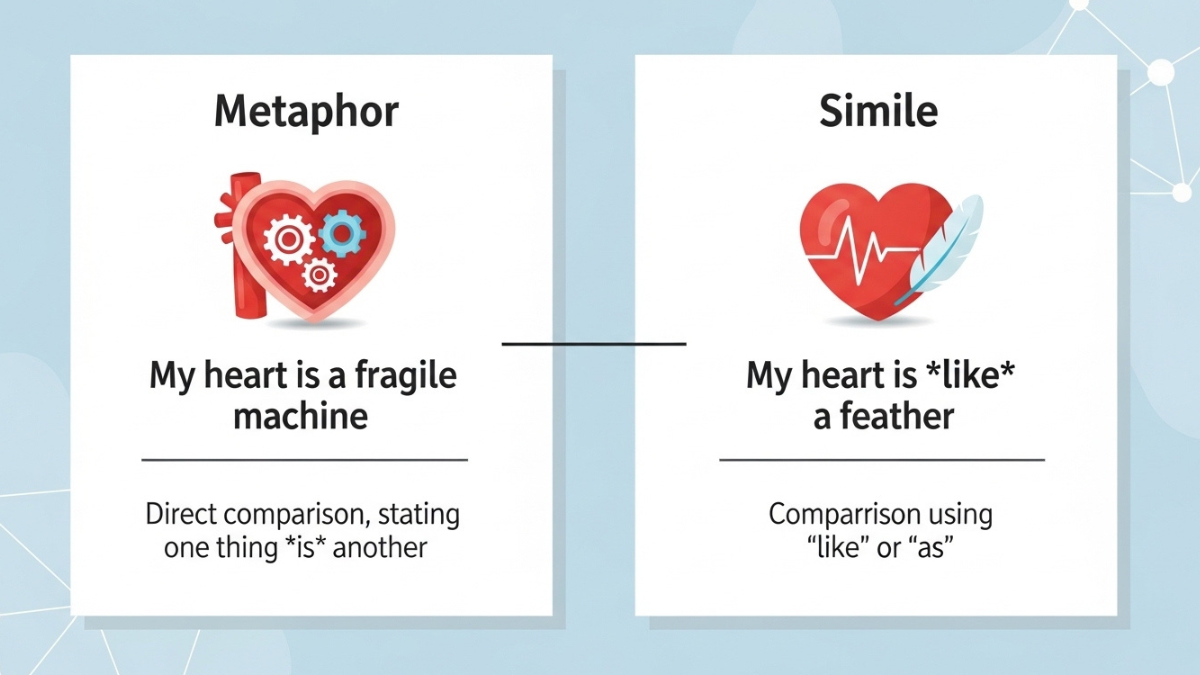
Understanding Metaphors and Similes
Metaphors and similes are both forms of comparison used to describe one thing by relating it to another. However, they differ in how the comparison is presented.
A simile directly compares two things using words such as “like” or “as.” A metaphor, on the other hand, describes one thing as if it actually is another thing.
Examples include:
- Simile: “Her smile was like sunshine.”
- Metaphor: “Her smile was sunshine.”
These examples demonstrate the basic metaphor vs simile difference. Similes make comparisons explicit, while metaphors create stronger symbolic identification.
Both are important literary devices because they improve emotional expression and imaginative storytelling. Writers use them to create vivid imagery and deepen reader engagement.
Why Figurative Language Matters in Writing
Figurative language enhances storytelling by making descriptions more emotional, memorable, and visually engaging. Effective writing techniques help readers imagine scenes and emotions more clearly.
Figurative language improves writing by:
- Creating strong imagery
- Increasing emotional impact
- Enhancing creativity
- Improving reader immersion
- Making language more memorable
Understanding the metaphor vs simile difference allows writers to choose the most suitable comparison style for different narrative situations.
Many classic and modern authors rely heavily on these literary devices because literal descriptions alone often lack emotional depth and artistic expression.
Key Differences Between Metaphors and Similes
Although metaphors and similes both compare ideas, they create different emotional and stylistic effects.
| Feature | Simile | Metaphor |
|---|---|---|
| Comparison Style | Uses “like” or “as” | Direct comparison |
| Emotional Impact | Softer and descriptive | Stronger and symbolic |
| Clarity | Easier to understand | More interpretive |
| Writing Style | Gentle imagery | Powerful imagery |
| Example | “Cold like ice” | “He was ice cold” |
This table highlights the essential metaphor vs simile difference and explains how each technique influences storytelling tone and emotional intensity.
Similes often feel more conversational and accessible, while metaphors create deeper symbolic meaning. Both remain valuable writing techniques depending on the writer’s goals and style.
How Writers Use Metaphors in Storytelling
Metaphors are among the most powerful literary devices because they create strong symbolic associations and emotional depth. Instead of simply comparing two ideas, metaphors blend them together conceptually.
Examples of metaphors include:
- “Time is a thief.”
- “The classroom was a zoo.”
- “Her voice was music.”
These comparisons create emotional and imaginative impact by transforming abstract concepts into vivid imagery.
Writers frequently use metaphors to:
- Explore emotions
- Develop symbolism
- Create thematic depth
- Strengthen narrative tone
- Improve poetic language
Understanding the metaphor vs simile difference helps writers recognize when direct symbolic comparison creates stronger emotional resonance.
Many advanced writing techniques in poetry and literature rely heavily on metaphor because symbolic language encourages deeper interpretation and emotional engagement.
How Similes Improve Descriptive Writing
Similes create clear and relatable imagery by directly comparing two things using “like” or “as.” These comparisons help readers visualize emotions, settings, and actions more easily.
Examples of similes include:
- “He ran like the wind.”
- “The water was as clear as glass.”
- “She fought like a lion.”
Similes are especially useful in descriptive storytelling because they make imagery immediate and understandable.
Strong writing techniques often combine similes with sensory details to strengthen reader immersion. Similes can also make abstract emotions easier to understand by connecting them to familiar experiences.
As important literary devices, similes appear frequently in children’s literature, poetry, speeches, and song lyrics because they create accessible emotional imagery.
The Emotional Impact of Figurative Comparisons
Both metaphors and similes strengthen emotional storytelling by transforming ordinary descriptions into imaginative experiences.
| Figurative Device | Emotional Effect |
|---|---|
| Metaphor | Deep symbolic intensity |
| Simile | Clear visual imagery |
| Extended Metaphor | Complex thematic meaning |
| Poetic Simile | Emotional rhythm and beauty |
The emotional impact of these writing techniques depends on context, tone, and creativity. A powerful metaphor may completely shape a story’s theme, while a well-placed simile can make a scene more vivid and emotionally relatable.
Understanding the metaphor vs simile difference helps writers select the most effective figurative language for specific emotional moments.
Common Mistakes When Using Metaphors and Similes
Although figurative language improves creativity, weak or excessive comparisons can confuse readers or weaken storytelling quality.
| Common Mistake | Why It Weakens Writing |
|---|---|
| Overused comparisons | Feels cliché |
| Mixed metaphors | Creates confusion |
| Forced imagery | Sounds unnatural |
| Excessive figurative language | Distracts readers |
| Weak emotional relevance | Reduces impact |
One major issue in writing techniques is relying on clichés such as “busy as a bee” or “cold as ice” too frequently. Original comparisons create stronger emotional and imaginative effects.
Strong literary devices should feel natural within the narrative rather than appearing forced or overly decorative.
Metaphors and Similes in Modern Media
Figurative language remains extremely important in modern communication and entertainment. Metaphors and similes appear across many creative industries including:
- Literature
- Film dialogue
- Song lyrics
- Advertising
- Social media content
Modern marketing often uses emotional metaphors to make products feel exciting or aspirational. Songwriters rely heavily on similes and metaphors to communicate emotional experiences through memorable lyrics.
Understanding the metaphor vs simile difference is valuable not only for writers but also for advertisers, educators, speakers, and content creators.
Why Literary Devices Matter in Creative Writing
Creative writing becomes more engaging when writers use figurative language effectively. Strong literary devices help stories feel emotionally rich, imaginative, and memorable.
Benefits of figurative language include:
- Improved emotional depth
- Stronger visual imagery
- Greater reader engagement
- More artistic expression
- Enhanced storytelling atmosphere
Mastering these writing techniques allows writers to create unique narrative voices and emotionally powerful scenes.
Understanding the metaphor vs simile difference also improves literary analysis because readers can better recognize symbolic meaning and artistic style within texts.
How Writers Can Improve Figurative Language Skills
Writers improve figurative language by practicing observation, creativity, and emotional association.
Helpful strategies include:
- Reading poetry and literature
- Observing sensory details
- Avoiding clichés
- Experimenting with symbolism
- Revising comparisons carefully
Effective writing techniques focus on originality and emotional relevance rather than simply adding decorative language.
Strong literary devices should support the story’s tone, themes, and emotional goals naturally.
Conclusion
Understanding the metaphor vs simile difference is essential for improving descriptive and emotionally engaging writing. Both metaphors and similes are powerful literary devices that strengthen storytelling by creating vivid imagery, emotional depth, and creative expression. While similes provide clear comparisons using “like” or “as,” metaphors create stronger symbolic connections that deepen interpretation and emotional resonance.
Mastering these writing techniques helps writers communicate ideas more creatively across literature, poetry, speeches, media, and everyday communication. As storytelling continues evolving, figurative language remains one of the most effective tools for making writing memorable, imaginative, and emotionally impactful.
FAQs
What is the metaphor vs simile difference?
The metaphor vs simile difference is that similes use “like” or “as” for comparison, while metaphors make direct symbolic comparisons.
Why are literary devices important in writing?
Literary devices improve creativity, emotional depth, imagery, and reader engagement in storytelling.
What are examples of similes?
Examples include “fast like lightning” and “cold as ice.”
What are examples of metaphors?
Examples include “time is a thief” and “the classroom was a zoo.”
How do writing techniques improve storytelling?
Strong writing techniques create vivid imagery, emotional impact, and memorable narrative experiences for readers.
Click here to know more.